CASE STUDY · LEADERSHIP CAPABILITY
Building leaders who could carry a culture
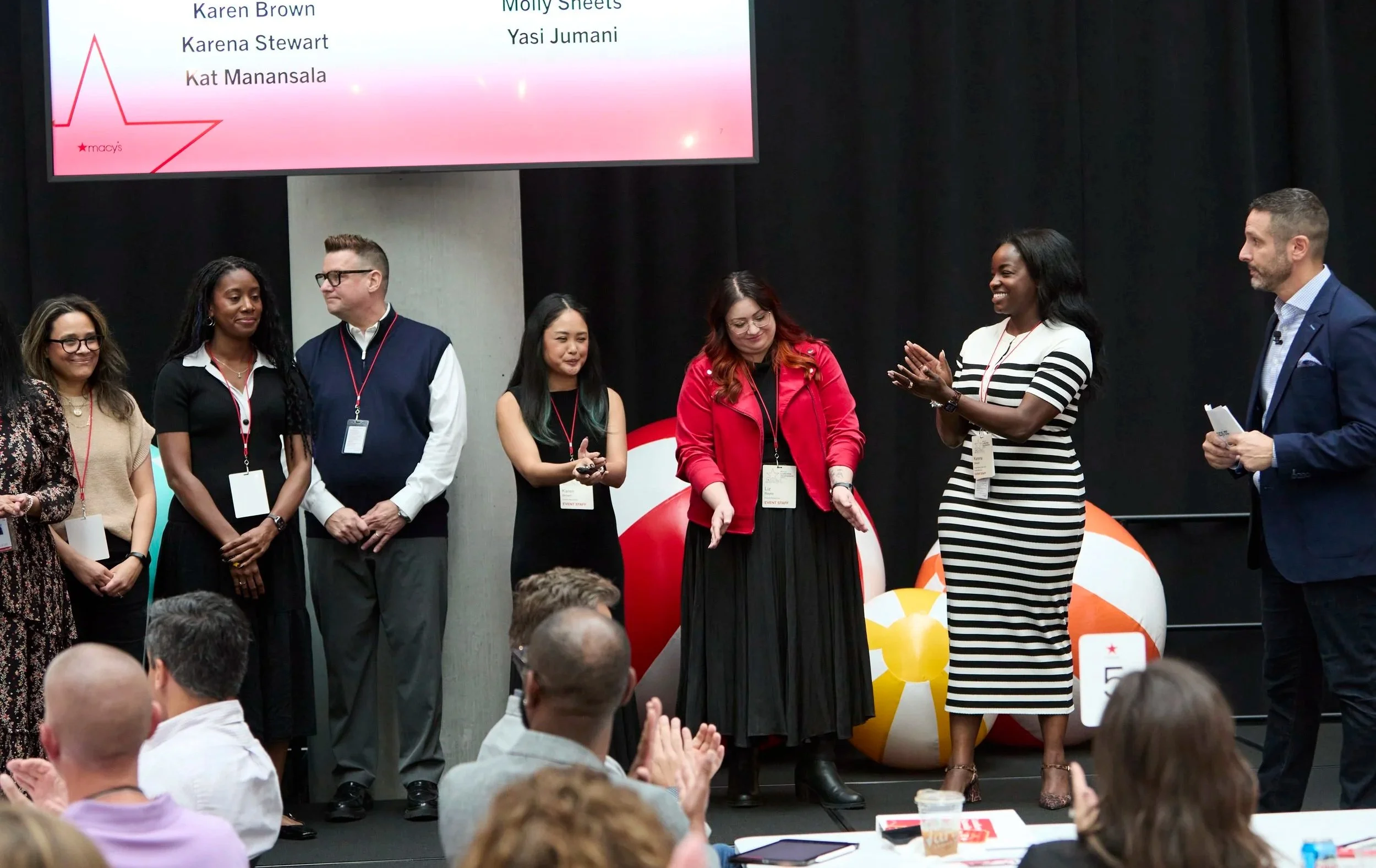
THESIS
Transformation fails in two directions.
1: Skill without belief. Behaviors performed flawlessly in the workshop and abandoned the first hard week, because nobody pays the cost of a new behavior they don't believe in. That's compliance, and compliance is brittle.
2: Belief without skill. Conviction that collapses at the first tough conversation for lack of tools, and curdles into deeper cynicism when it fails.
The two are multiplicative. If either is zero, the product is zero. At Macy's, I engineered an enterprise leadership transformation for both: belief first, skill immediately behind it, each compounding the other. Skeptics walked in. Believers walked out, equipped. The program before this one reached 1,900 leaders in twenty years. This one reached 1,700 in a matter of weeks, and won Macy's top enterprise honor.
The problem
Macy's was adopting a new culture: a new purpose and five values under one promise, Together, we deliver genuine hospitality.
The challenge wasn't writing it. It was living it, through 10,000 people leaders and an 85,000-person workforce, inside an organization built against it. The hierarchy was steep, which makes it hard to serve each other as equals. The silos were deep, which makes it hard to move as one company. And the population was long-tenured, thirty years of service isn't rare, with every reason to treat this as the flavor of the month. They'd seen those come. They'd seen them go.
So the deliverable was never a training program. It was 10,000 leaders who believed the change was real and had the skill to lead it. Both, or neither would hold.
The design
The objective: equip every people leader with the tools, skill, and support to apply a new Leadership Standard in everyday moments.
The Standard translated the five values into concrete leader behavior, paired with a companion guide and a self-assessment that turned it inward. I was the accountable leader, orchestrating expertise from across the company and sourcing outside perspective to bring it to life.
One principle governed how I sequenced the work: know first, go first, show first. Leaders learn what's changing before anyone else, do the harder work of changing first, and show it visibly, so the organization follows proof instead of memos.
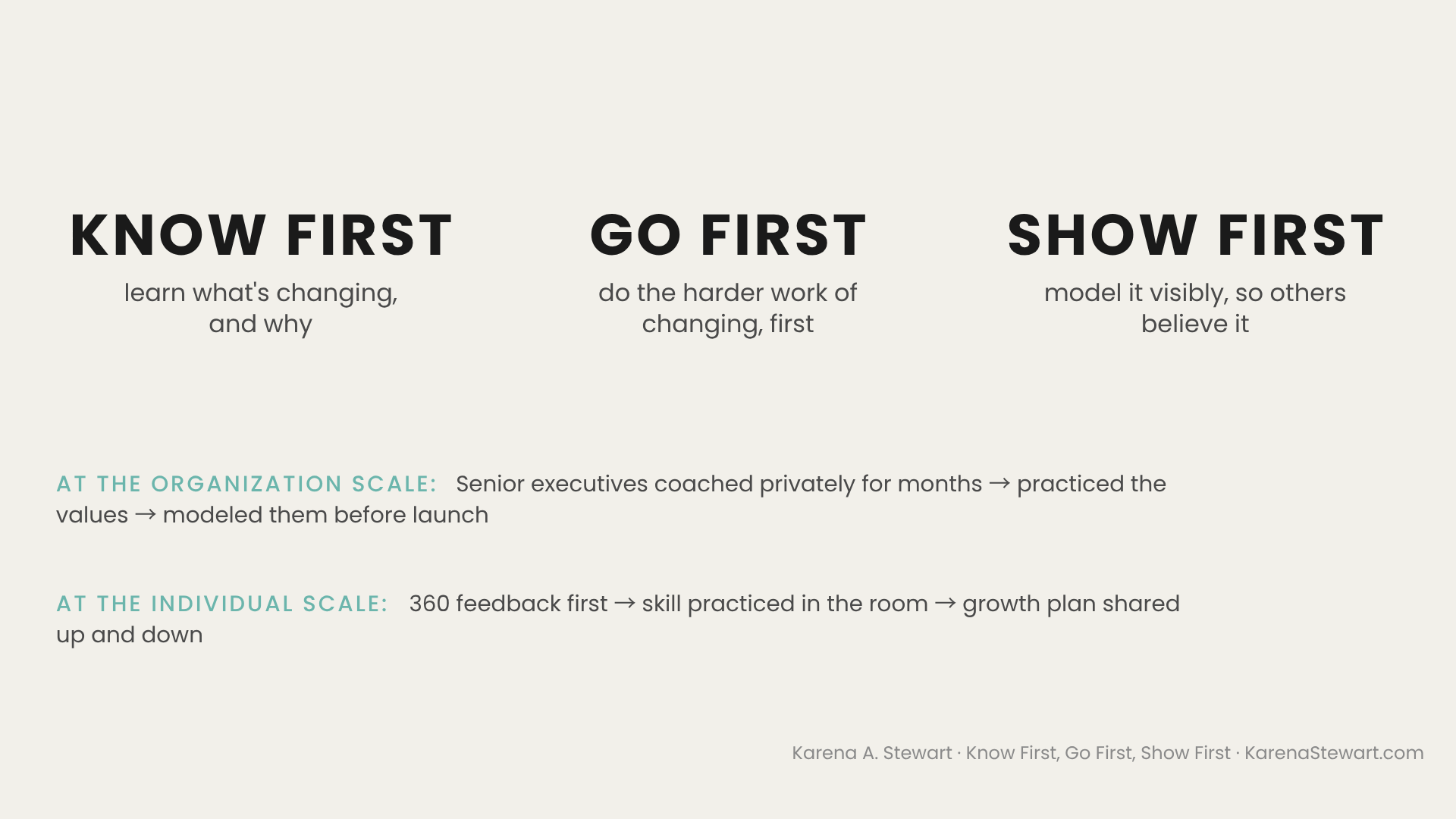
The rollout moved in four deliberate waves:
Accelerate the top. Months before launch, every VP and above, more than 140 leaders, worked privately with an executive coach, each strengthening the value where they had the most room to grow. By the time the company heard about the change, its most senior leaders were already living it.
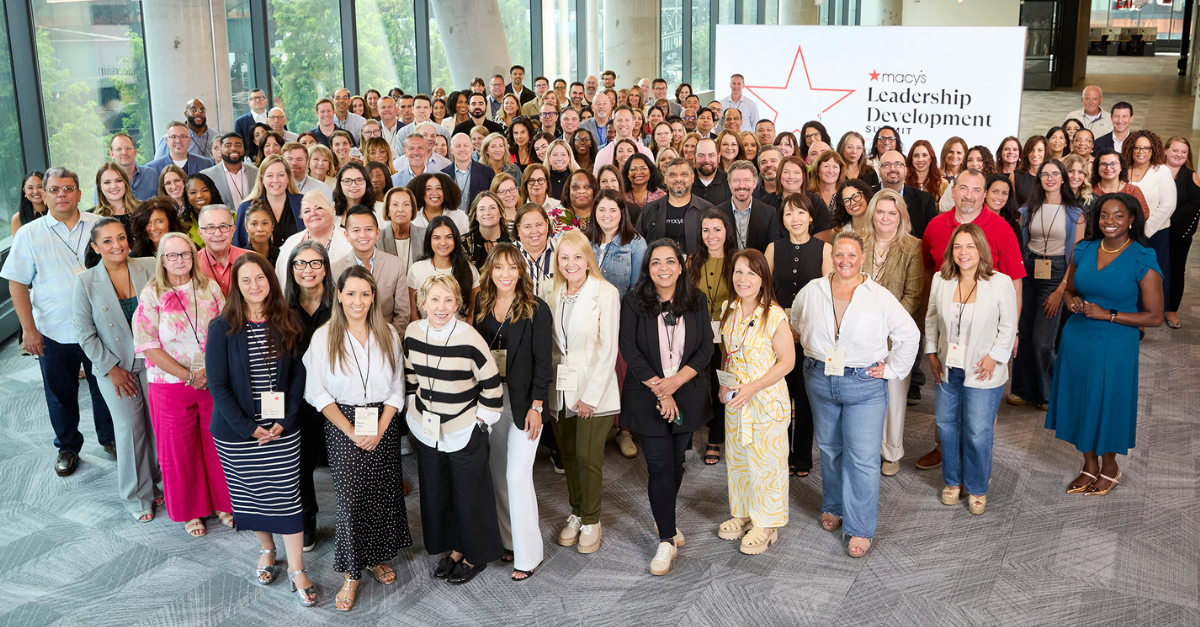
Introduce it to everyone. All 10,000 people leaders were onboarded into the Standard, more than 6,000 through the first 60-plus sessions, led not by trainers but by the VPs themselves.
Intensify the champions. 1,700 Directors through SVPs, the leaders with outsized impact on adoption, went through fourteen two-day summits, in cohorts of 150 to 180, built to convert belief into practiced skill.
Reinforce to prevent gaps. Micro-learning and nudges, short, accessible, engaging, so the standard kept showing up long after the events ended.
One of those choices was a fight I started on the wrong side of. I argued that outside consultants should deliver the content; they had thousands of facilitation hours, and most of our leaders, deeply skilled in their domains, had never facilitated a room of 150 peers. The feedback proved me wrong at every turn. What moved leaders was watching their own peers tell real stories about living these values, getting it wrong, and fixing it. A consultant can teach a skill. Only a peer can prove a belief.
What the signals told us
Sequencing leaders first turned the rollout into a live feedback system. The signals told us where the culture was landing, and where a gap we'd previously exposed was finally being filled. Which diagnostics were working, and what we'd gotten wrong in time to correct it. Who was ready to stand in front of a room and lead it. And where belief was thin, so we could close that distance deliberately instead of discovering it too late.
With an audience that had seen initiatives come and go, that last signal mattered most. Belief you can't measure is belief you can't build.
Building belief: common ground before the mirror
Every summit leader arrived carrying 360-degree feedback: candid assessments of their strengths and blind spots against the new standard, gathered from their bosses, their peers, and their own direct reports, delivered a week earlier. Unprocessed. Undiscussed. There are few things more exposing for a leader than learning, in writing, how the people above, beside, and below actually experience you, and raw feedback like that lands a hundred ways: defensive, anxious, eager, resolved. The work ahead was individual, your feedback, your growth plan, your gaps. But you cannot develop a leader who is busy defending themselves. Belief had to come before the mirror.
So the first thing every leader walked into was the Heritage Room, a museum of Macy's history I built with a team of 25, none of us with museum experience, out of a defunct mailroom in 29 days. Before asking leaders to look at their own gaps, we gave them something no one had to fix, only embrace: a story they all already shared, taken out of the boxes and brought into the light.
Building the Heritage Room: forgotten mailroom, unforgettable museum. Two minutes.
And they found themselves in it, each in their own way. Tenured leaders, in a company where thirty years of service isn't rare, recognized their own work in the timeline: initiatives they'd led, launches they'd survived, failures they remembered. The newest leaders found the origin of the work they now carry, their peers on the walls, and the Macy's they'd known as customers before they ever became colleagues. The room made one truth physical: everything on a pedestal there was once a colleague's bold idea, carried forward, and their contributions belong to the same story, displayed or not.
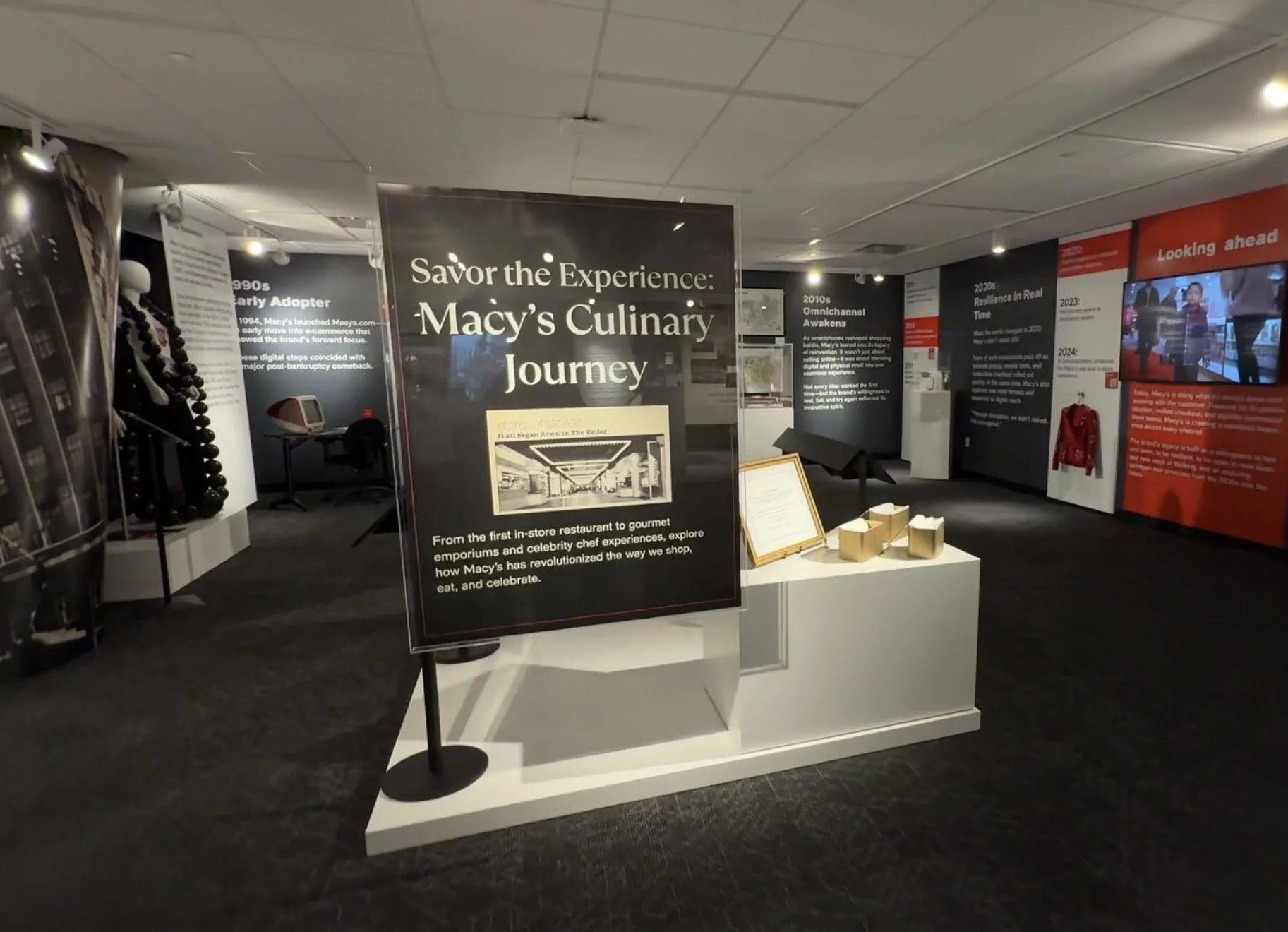
The exit turned pride into commitment. Beneath a wall reading the past is our history; the future is our responsibility, each leader wrote a commitment to that future on a star and placed it among the others, a constellation of intentions. And on the facing wall, among the solid red stars, hung mirrored ones, so that leaders looking at the future of Macy's saw their own reflection in it. Belief came before the mirror, and ended at one.
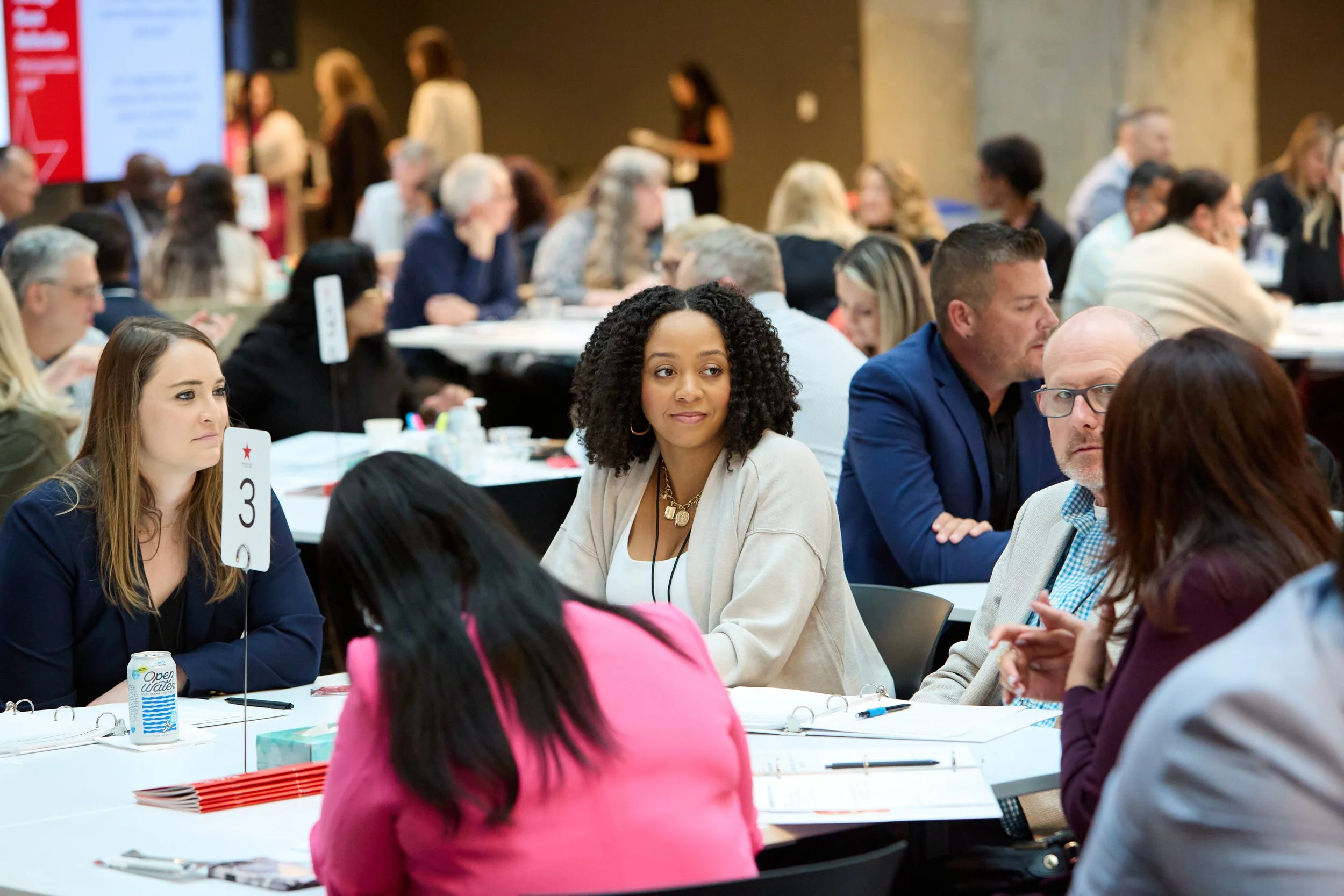
Even the badges served belief. At the CHRO's suggestion we removed titles, then functions too, so a table of six held no SVPs and no first-time directors, no merchants and no technologists, just people who chose Macy's, who love it, and who are flawed and skilled. Conversations stopped being about impressing the person next to you and became about connecting with them, across the hierarchy and silos that usually keep leaders apart. You cannot build hospitality inside a rigid org chart. For two days, there wasn't one.
Building skill: muscle memory, not memos
Belief opened the door. Skill walked through it, immediately, and nobody sat still for it.
The two days were built as working sessions, each workshop anchored to one behavior of the Leadership Standard, and the learning happened on their feet. Leaders paired up to rework a real trust breach from their own past, and what they would do differently now. They role-played the tough conversations most leaders avoid, giving feedback upward, across, and about performance, practicing candor where "nice" avoidance used to live. They built strategy against a live business challenge. And on day two, cross-functional teams took on a capstone case that was deliberately disrupted midway, so they had to lead through the wobble in real time rather than talk about leading through change.
Threaded through all of it was a Personal Growth Plan. Leaders captured what they were learning as they went, finished the plan before they left, and were asked to share it in every direction, with their manager, and with their direct reports. Commitment moved down as well as up.
Then we did something that surprised people: no mandate to go teach it. The next step was deliberately selfish, practice it yourself first; change your own Monday before you preach anyone else's. It mirrored what their most senior leaders had done months earlier: private practice before public coaching. The cascade came later, from leaders who had already changed, which is the only cascade anyone believes.
And the skill was designed to embed, not stick. We told leaders plainly: this content is 70 percent of the way there, and it needs your experience and application to finish it and evolve it as the company evolves. It would have been a failure if leaders were only as good six months later as the day they left.
A program that sticks sits on the surface. A program that embeds grows roots.
The payoff
Leaders came in guarded. Many walked out disarmed, some in tears, not because of anything we said, but because of what they'd felt and practiced. The line we heard again and again: I came in skeptical. I left a believer. With this audience, that was the whole game.
“That fire has always been there, but now it’s roaring, and I saw that same spark ignite in so many others.”
Then came the reinforcement to sustain it: micro-learning, nudges, and a documentary I designed and executive produced that carries the Heritage Room to every colleague who can't stand in it. The speed at the top of this page was never the point. It was proof that when belief and skill are engineered together, an organization stops resisting its own transformation.
What it proves
The thesis held. Belief, measured in live signals and built before the mirror. Skill, practiced on its feet and carried home in a plan shared in every direction. Multiplied together, they moved a skeptical, long-tenured leadership population that twenty years of programs hadn't.
People call this soft-skill work. This program hardened it.
I led it, the vision, the sequencing, the hard calls, and I led it through people whose brilliance sits inside every part of it.
Faster alone; further together.
The Heritage Room is the part people remember. Belief and skill, engineered to compound, are why it held.